

Buying guide · · 5 min read
Choosing the Right Floor Jack Tonnage
Why a 3-ton jack is not always better, and how vehicle weight, lift height and saddle size fit together.
Start with curb weight
Find your vehicle’s curb weight on the door-jamb sticker or in the manual. When you lift one end of a car, the jack carries roughly half to 60% of the total weight. A useful rule is to choose a jack rated for at least three-quarters of the vehicle’s gross weight so you have margin.
Typical matches
Compact and mid-size cars (2,500–3,500 lb): a 2-ton jack is sufficient. Full-size cars, crossovers and small SUVs (3,500–5,000 lb): 3 tons. Full-size trucks and large SUVs: a 3-ton jack with a 20 in or higher lift, or a bottle jack for axle work.
Height matters as much as tonnage
Minimum height decides whether the jack fits under the car; maximum height decides whether you can lift high enough to fit stands. Lowered cars need an entry height under 4 in. Trucks need 20 in or more at the frame.
Weight and portability
Aluminum jacks weigh about a third less than steel jacks of the same capacity. If you take the jack to the track or move it around the garage, aluminum is easier. If it stays in one bay, steel gives you more lift height per dollar.
Match your stands
Buy stands with at least the same tonnage as your jack, rated per pair, with a height range that covers the car at your chosen working height.
Gear for this job
Floor Jacks
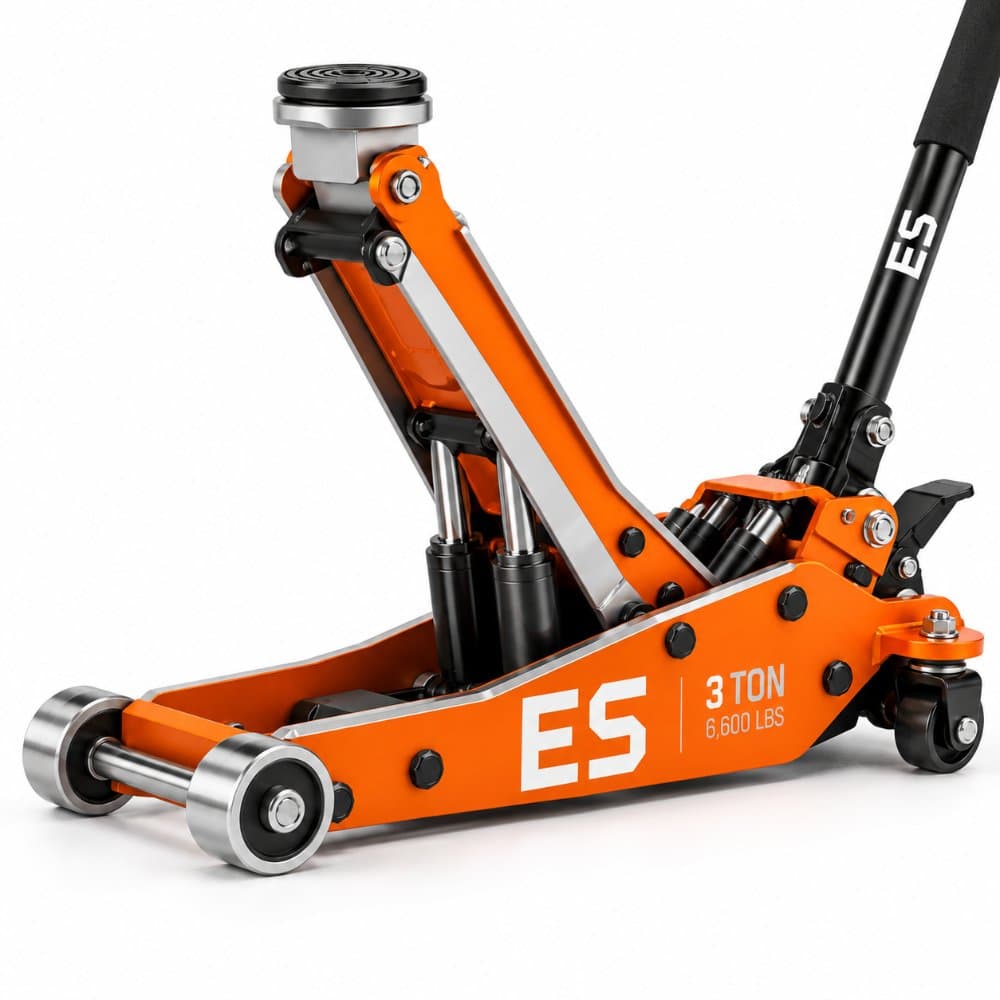
3-Ton Aluminum Floor Jack
- Capacity
- 3 ton
- Lift Range
- 3.5 in – 19.5 in
- Weight
- 56 lb
$249.99
In Stock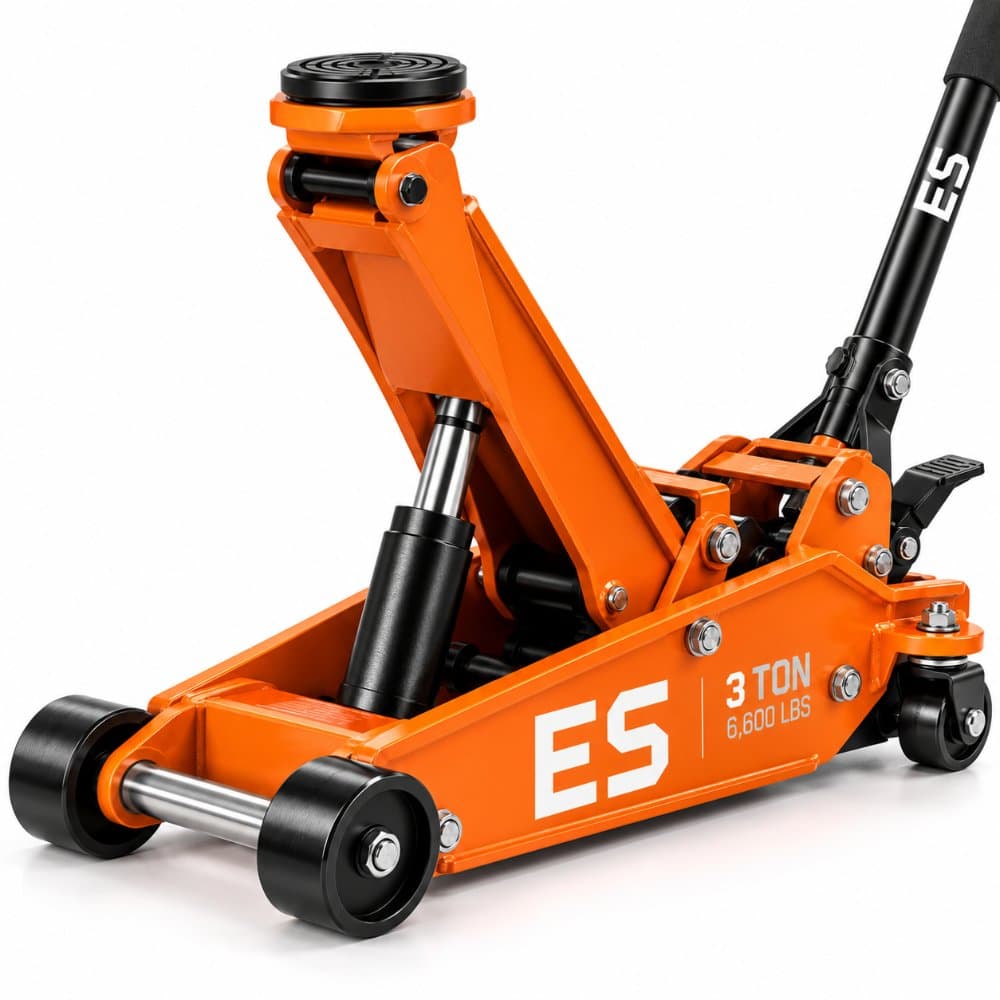
Floor Jacks
3-Ton Steel Floor Jack
- Capacity
- 3 ton
- Lift Range
- 5.25 in – 21 in
- Weight
- 78 lb
$179.99
In Stock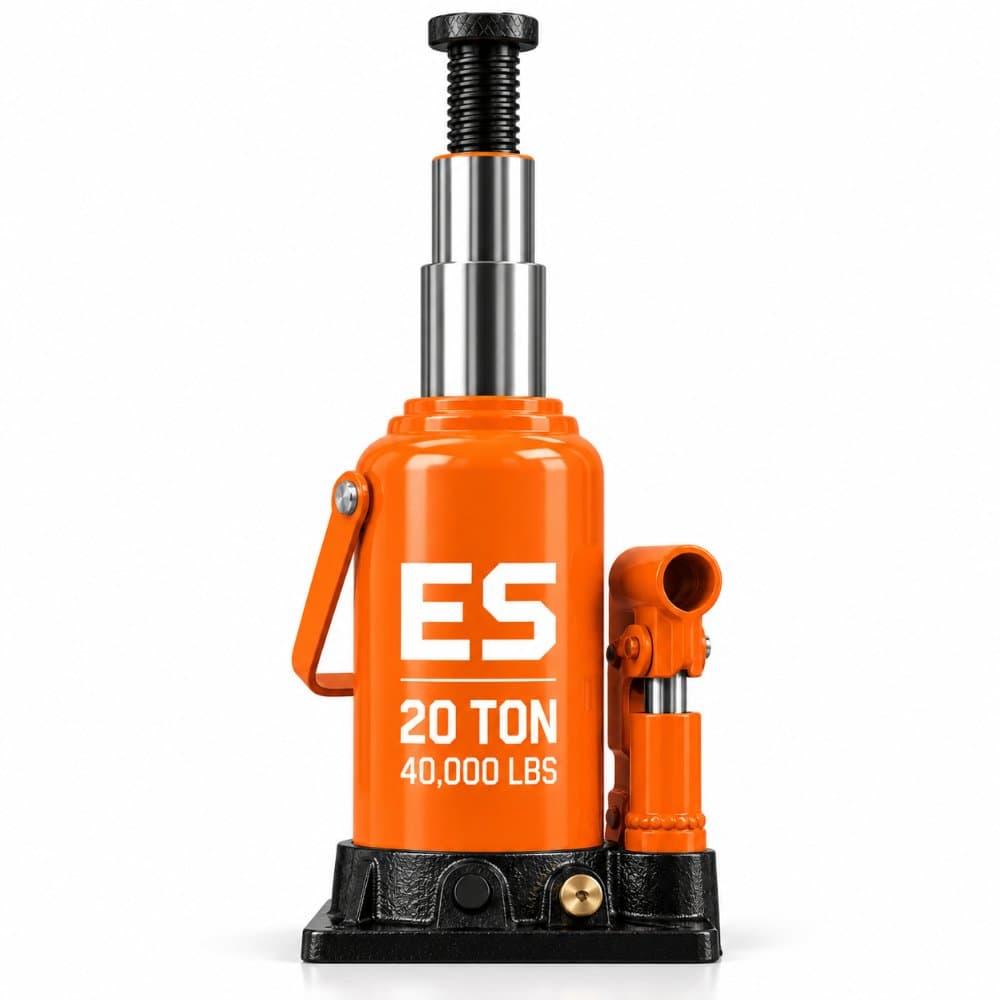 Sale
SaleBottle Jacks
20-Ton Bottle Jack
- Capacity
- 20 ton
- Lift Range
- 9.5 in – 18 in
- Weight
- 24 lb
$74.99Was $84.99